Japanese tattoo art is celebrated for its bold imagery, flowing compositions, and deep cultural symbolism. Traditional designs often feature powerful creatures, flowers, waves, clouds, warriors, and mythical figures arranged in visually striking compositions.
Modern interpretations can preserve these recognizable elements while using cleaner lines, smaller placements, or minimalist details. Every design can tell a different story, making Japanese-inspired tattoos especially appealing to people who want meaningful body art with a distinctive visual identity. These 23 Japanese tattoo ideas explore different motifs, styles, and placements to inspire your next piece. Save your favorites and discuss your preferred details with an experienced tattoo artist.
1. Japanese Dragon Tattoo

Japanese dragon tattoos are among the most recognizable designs in traditional tattoo art. Dragons can symbolize strength, wisdom, protection, and power, making them meaningful choices for a statement piece. Their long bodies work beautifully across the arm, back, ribs, or thigh because the composition can follow the natural shape of the body.
Traditional versions often include waves, clouds, wind bars, or flowers around the dragon. Bold outlines and detailed scales create an impressive appearance. A skilled tattoo artist can customize the dragon’s expression, movement, colors, and surrounding elements to create a personal design.
2. Japanese Koi Fish Tattoo

Koi fish are classic subjects in Japanese tattoo art and are often associated with perseverance, determination, courage, and transformation. Their flowing bodies make them ideal for dynamic compositions that move naturally across the skin.
You can choose a single koi swimming upward or create a larger scene featuring multiple fish, waves, maple leaves, or lotus flowers. Black-and-gray versions offer a dramatic appearance, while orange, red, gold, and blue can create a vibrant traditional effect. The arm, calf, thigh, and back are popular placements because they provide enough room for the fish’s flowing shape.
3. Japanese Phoenix Tattoo

A Japanese phoenix tattoo can represent renewal, resilience, transformation, and rising after difficult experiences. Its sweeping feathers and dramatic wings allow an artist to create a visually impressive composition.
Traditional designs often incorporate flames, clouds, flowers, or wind elements around the bird. A phoenix can be designed vertically along the back, arm, or thigh, or positioned across the chest and shoulder. Bright reds, oranges, golds, and deep blacks can emphasize its dramatic appearance. This is an excellent choice for tattoo lovers who want a symbolic design with movement and strong visual impact.
4. Japanese Oni Mask Tattoo

Oni masks create bold and dramatic Japanese tattoo designs. In Japanese folklore, oni are supernatural beings often depicted with horns, sharp teeth, and intense expressions. In tattoo art, an oni mask can represent protection, strength, determination, or the ability to confront adversity.
Artists can emphasize the mask’s expression using heavy outlines, dramatic shading, and vibrant colors. Add surrounding elements such as peonies, waves, smoke, or maple leaves for a traditional composition. An oni design works especially well on the upper arm, thigh, calf, chest, or back where its detailed features have room to stand out.
5. Japanese Hannya Mask Tattoo

The Hannya mask is one of the most recognizable motifs associated with Japanese tattoo art. Inspired by traditional Noh theater, the mask is known for its horns, metallic eyes, and intense expression. It is often connected with powerful emotions, particularly jealousy, anger, and transformation.
Tattoo artists can create dramatic depth using shadows, layered colors, and carefully rendered facial details. Pairing a Hannya mask with peonies, snakes, waves, or maple leaves can create a fuller Japanese composition. The shoulder, upper arm, thigh, and back provide excellent areas for this intricate design.
6. Japanese Samurai Tattoo

Samurai tattoos celebrate the imagery of Japan’s historic warrior class and can represent discipline, courage, loyalty, honor, and determination. A detailed samurai portrait can include traditional armor, helmets, swords, and flowing garments.
Larger compositions may place the warrior within a dramatic scene featuring clouds, waves, blossoms, or architectural elements. Because portraits require considerable detail, larger placements such as the back, thigh, chest, or full sleeve are generally more suitable. A skilled artist can focus on facial expression and armor details to create a powerful piece with a distinctly Japanese visual character.
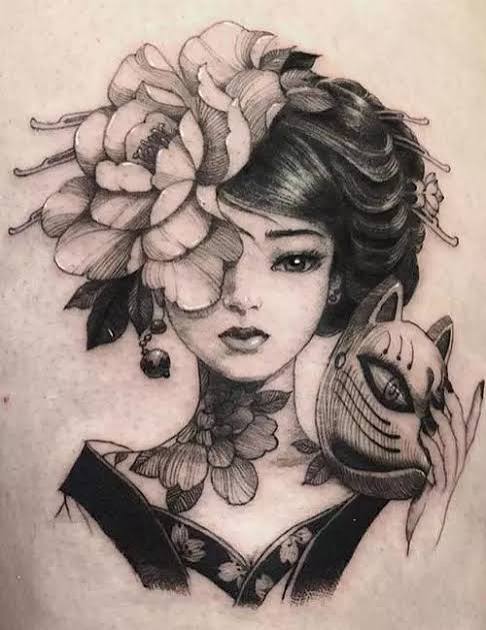
7. Japanese Geisha Tattoo


Geisha-inspired tattoos can create elegant compositions featuring traditional Japanese clothing, hairstyles, fans, flowers, and decorative details. The design can emphasize beauty, grace, artistry, and Japanese cultural imagery. A geisha tattoo requires careful attention to facial proportions, hair, kimono patterns, and posture, so choosing an experienced artist is particularly important.
Large areas such as the back, thigh, or upper arm provide space for intricate details. You can surround the figure with cherry blossoms, peonies, chrysanthemums, or waves to give the design a richer traditional appearance.
8. Japanese Tiger Tattoo

Japanese tiger tattoos are powerful designs often associated with strength, courage, protection, and determination. The tiger’s striped body and expressive face provide excellent opportunities for detailed tattooing. Traditional compositions frequently place the animal among bamboo, clouds, wind, or rocks. A tiger can be positioned crawling, roaring, or moving dynamically across the skin. Full sleeves, shoulders, thighs, and backs offer enough space for a detailed composition.
Black-and-gray shading creates a dramatic effect, while traditional orange and yellow tones can give the tiger a classic Japanese tattoo appearance.
9. Japanese Snake Tattoo

Snake tattoos can bring mystery, movement, and symbolism to Japanese-inspired body art. The snake’s long, winding shape allows it to wrap naturally around an arm, leg, or torso.
Traditional compositions often combine snakes with peonies, chrysanthemums, skulls, or other symbolic imagery. Artists can emphasize scales, movement, and facial expression using detailed linework and shading. A snake can also be designed as part of a larger sleeve rather than standing alone. Consider a vertical or curved composition if you want the tattoo to follow the natural contours of your body.
10. Japanese Wave Tattoo

Japanese waves are iconic elements that can make a tattoo feel energetic and fluid. Inspired by traditional Japanese visual art, wave designs often feature curling shapes, foam details, and layered movement.
Waves can represent power, change, life’s constant movement, or a connection with the sea. They work beautifully as standalone tattoos or as background elements surrounding koi, dragons, tigers, and other Japanese motifs. Arms, calves, thighs, ribs, and shoulders can all accommodate wave compositions. Blue ink creates a classic appearance, while black-and-gray designs offer a more understated interpretation.
11. Japanese Peony Tattoo

Peonies are beautiful additions to Japanese tattoo compositions and can bring softness to designs featuring powerful creatures. Their large layered petals create excellent opportunities for shading and color variation.
Japanese-style peonies are often combined with dragons, koi, snakes, lions, or Hannya masks. Red, pink, purple, and white tones can produce different moods, while black-and-gray shading gives the flower a more dramatic appearance. Peonies work well on their own or as part of a larger sleeve. Their rounded shape also complements curved areas such as shoulders, thighs, and hips.
12. Japanese Cherry Blossom Tattoo

Cherry blossoms are among the most recognizable Japanese-inspired tattoo motifs. Their delicate flowers can represent beauty, renewal, and the temporary nature of life. Sakura branches can be designed as small standalone pieces or expanded into large compositions covering the shoulder, back, ribs, or thigh. Pink blossoms create a soft and feminine appearance, while black-and-gray versions can feel more understated.
Falling petals can add movement and make the tattoo appear as though it is flowing across the skin. Cherry blossoms also pair beautifully with samurai, geisha, koi, and Japanese landscapes.
13. Japanese Maple Leaf Tattoo

Japanese maple leaves are beautiful seasonal motifs that can add color and movement to a tattoo. Their distinctive shapes make them easy to recognize, while clusters of leaves can create a flowing composition. Red, orange, yellow, and burgundy tones can create a dramatic autumn-inspired appearance.
Maple leaves can also be used as background elements around koi fish, dragons, snakes, or other Japanese motifs. They work well on sleeves, shoulders, thighs, calves, and ribs. A scattering of individual leaves can create a lighter composition than a dense traditional tattoo.
14. Japanese Foo Dog Tattoo

Foo dog tattoos, also known as guardian lion-inspired designs, can create bold and detailed Japanese-style pieces. These mythical guardian figures are associated with protection and strength and are often depicted with elaborate manes, expressive faces, and powerful poses.
Their rounded bodies and flowing fur work well in larger tattoo compositions. Pair a foo dog with peonies, clouds, waves, or ornamental backgrounds to create a traditional appearance. The upper arm, shoulder, thigh, and calf are excellent placements for this type of artwork. Strong outlines and detailed shading help emphasize its sculptural appearance.
15. Japanese Lotus Tattoo

A Japanese lotus tattoo can create an elegant design with spiritual and symbolic associations. The flower’s symmetrical petals make it naturally suited to balanced tattoo compositions.
You can choose a single lotus for a minimalist piece or combine several flowers with waves, koi, clouds, or decorative elements. Black-and-gray shading gives the petals a sophisticated appearance, while pink, red, purple, or blue can add visual richness. The forearm, shoulder, thigh, calf, and upper back are popular areas for lotus designs. This motif can work equally well in traditional and modern interpretations.
16. Japanese Crane Tattoo

Crane tattoos can bring elegance and movement to Japanese-inspired body art. The bird’s long legs, extended wings, and flowing feathers provide an artist with plenty of opportunities for graceful linework. Cranes are often associated with longevity, good fortune, peace, and hope in Japanese cultural imagery.
A flying crane can create a dynamic vertical composition, while a standing bird offers a more peaceful appearance. Add cherry blossoms, waves, clouds, or a rising sun for additional visual context. The back, shoulder, thigh, and upper arm offer enough space for detailed feather work.
17. Japanese Dragon and Koi Tattoo

Combining a dragon and koi creates a dramatic Japanese tattoo composition filled with movement and symbolism. The two creatures can be positioned swimming or winding around one another, creating an eye-catching design that follows the body’s natural contours.
Waves, clouds, flowers, and wind bars can fill the surrounding space and connect the elements. This concept works particularly well as a full sleeve, back piece, or thigh tattoo because both subjects benefit greatly from additional room. A combination of deep blacks and traditional colors can create impressive contrast.
18. Japanese Oni and Hannya Tattoo

An oni and Hannya-inspired tattoo can create a striking composition centered around dramatic facial expressions. The contrasting features of horns, teeth, intense eyes, and elaborate decorative details make these masks visually powerful.
Use bold shading and carefully selected colors to emphasize the expressions. Surrounding the masks with flowers, smoke, waves, or ornamental elements can create a traditional Japanese atmosphere. Larger placements such as the upper arm, thigh, chest, and back provide enough space for detailed facial work. This idea is especially appealing to tattoo lovers who prefer darker and more dramatic imagery.
19. Japanese Warrior and Cherry Blossoms

Combining a Japanese warrior with cherry blossoms creates a beautiful contrast between strength and delicate natural imagery. A samurai can serve as the main focal point, while branches and falling petals soften the surrounding composition.
Armor, helmet details, sword placement, and facial expression can make the design highly personalized. Larger areas such as the back, thigh, chest, or sleeve provide enough room for the entire scene. Black-and-gray shading can create a cinematic effect, while carefully placed red or pink blossoms add a subtle burst of color.
20. Japanese Skull Tattoo

Japanese skull tattoos can create a darker interpretation of traditional tattoo aesthetics. Skull imagery can represent mortality, transformation, impermanence, or an acceptance of life’s changing nature. Artists can combine the skull with snakes, flowers, waves, masks, or other Japanese motifs to build a more elaborate composition.
Bold outlines and dramatic shading work particularly well with this subject. A skull can be designed as a standalone tattoo or incorporated into a larger sleeve. The forearm, upper arm, thigh, calf, and chest provide enough space for detailed artwork.
21. Japanese Fans and Flowers Tattoo

Japanese fan tattoos offer an elegant way to incorporate traditional decorative imagery into body art. Folding fans can feature floral patterns, landscapes, waves, or other Japanese-inspired details. Pairing a fan with peonies, cherry blossoms, chrysanthemums, or maple leaves can create a graceful composition with plenty of visual texture.
The curved shape of a fan works especially well around the shoulder, thigh, upper arm, or hip. Choose vibrant colors for a decorative statement or use black-and-gray shading for a more refined interpretation. This design can also work beautifully as part of a larger Japanese-themed sleeve.
22. Japanese Sun and Clouds Tattoo

Japanese sun and cloud imagery can create a striking background or standalone tattoo. The sun can symbolize energy, life, warmth, and renewal, while stylized clouds help create movement around the central image. Traditional Japanese cloud shapes can also serve as filler elements within larger sleeves and back pieces. Use strong outlines and curved forms to achieve an authentic visual character.
Red and black can create a classic appearance, while softer black-and-gray shading gives the tattoo a contemporary feel. This motif works particularly well on shoulders, arms, backs, and thighs.
23. Full Japanese Irezumi Sleeve

A full Japanese-inspired sleeve is an impressive choice for anyone who loves detailed tattoo storytelling. The design can combine several classic motifs, such as dragons, koi, peonies, waves, clouds, maple leaves, masks, and other traditional imagery. Instead of treating each tattoo as a separate element, the artist can connect everything through consistent background patterns and flowing shapes.
This creates a unified composition that follows the arm naturally. A full sleeve requires significant planning and multiple sessions, so choose an artist experienced in Japanese tattoo aesthetics and discuss the overall composition before starting.
Japanese tattoo art offers an incredible range of imagery, allowing tattoo lovers to create pieces that feel powerful, elegant, mysterious, or deeply symbolic. Dragons, koi, flowers, masks, warriors, waves, birds, and seasonal motifs can stand alone or become part of larger compositions.
Placement also plays an important role because many Japanese designs are created to follow the body’s natural movement. Before choosing your final concept, consider the symbolism, size, color palette, and long-term composition. Most importantly, work with an experienced tattoo artist who understands Japanese-inspired techniques. With thoughtful planning, your tattoo can become a striking piece of personal art that remains meaningful for years.