Neotribal tattoos bring together bold shapes, flowing lines, dramatic curves, and modern artistic details. I love this style because it can look powerful while still leaving plenty of room for personal creativity. Thick black sections, sharp points, organic patterns, and unusual compositions can create designs that feel striking at first glance. The style also works well across many placements, including arms, legs, chest, back, shoulders, and thighs.
In this article, I’m sharing neotribal tattoo ideas that range well beyond traditional patterns. These designs can help you explore different shapes, placements, sizes, and visual combinations for your next tattoo appointment with confidence.
1. Bold Neotribal Arm Tattoo

A bold neotribal arm tattoo is a great choice if you want a design that immediately catches attention. I like how large black shapes can follow the natural movement of the arm while pointed extensions create an energetic appearance. You can build the design around the upper arm, forearm, or extend it across both areas for a stronger composition.
Curved sections can wrap around the muscles, making the tattoo feel connected to the body’s shape. Keeping the design mostly black allows the unusual silhouette and negative space to become the main visual features.
2. Neotribal Sleeve Tattoo

A neotribal sleeve gives you plenty of space to create an elaborate composition with multiple flowing elements. I would combine thick curved lines, pointed shapes, negative space, and organic forms so the tattoo feels connected rather than like separate stickers. The design can begin around the shoulder and gradually travel down toward the wrist. You can also leave areas of skin visible to create contrast between the heavy black sections.
A full sleeve can look especially striking when the shapes follow the arm’s natural contours. This style gives your tattoo artist plenty of room to create movement and visual balance.
3. Neotribal Chest Tattoo

The chest provides a broad canvas for a dramatic neotribal design. I like symmetrical compositions that begin near the center of the chest and spread toward the shoulders, although an asymmetrical design can look equally interesting.
Thick black curves can follow the chest muscles, while sharp points can create a stronger edge around the composition. Negative space is especially important here because it prevents a large tattoo from appearing too solid. You can keep the center relatively minimal or create an intricate focal point. A well-planned chest piece can feel powerful while still following the body’s natural structure.
4. Neotribal Back Tattoo

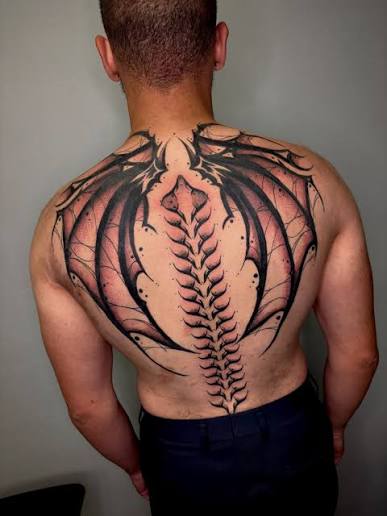
A back tattoo gives neotribal designs an enormous amount of room for creativity. I would consider a large central composition with sweeping shapes extending across the shoulder blades and lower back.
The design can use symmetrical forms or intentionally uneven elements for a more artistic appearance. Large areas of black ink can be balanced with carefully planned negative space so the tattoo remains visually readable. Because the back has broad, relatively flat areas alongside natural curves, it allows dramatic shapes to develop without being restricted. This is an excellent placement if you want a statement piece with plenty of visual impact.
5. Neotribal Shoulder Tattoo

The shoulder is a natural location for a neotribal design because curved patterns can wrap around its rounded shape. I love the idea of using a central black section over the shoulder with pointed extensions traveling toward the upper arm or collarbone.
The tattoo can remain relatively compact or become the beginning of a larger sleeve. Organic curves can make the design appear fluid as you move your arm. If you prefer something noticeable but not enormous, a medium-sized shoulder piece can provide plenty of visual character. The placement also gives your artist an interesting surface for creating movement and dimension.
6. Minimalist Neotribal Tattoo

Neotribal does not always have to mean a huge, heavily filled tattoo. A minimalist version can use just a few strong curves, pointed extensions, and carefully placed black sections. I like this approach for people who want the visual language of neotribal art without committing to a large composition. Small designs can work well on the forearm, ankle, wrist, shoulder, or upper arm.
Keeping the pattern relatively open gives the skin plenty of breathing room. A simple design can also age more gracefully visually because the individual shapes remain easy to recognize without excessive detail.
7. Neotribal Forearm Tattoo

The forearm is a versatile placement for a neotribal tattoo because the elongated shape allows patterns to stretch vertically. I would consider a design with a strong central line and curved extensions that follow the length of the arm. You can make the tattoo narrow and understated or use wider black sections for a more dramatic appearance.
Negative space between the shapes can create an interesting rhythm as the eye moves across the design. A forearm tattoo is also easy to show or cover depending on clothing. This makes it a practical location for someone wanting a noticeable but flexible tattoo.
8. Neotribal Thigh Tattoo

A thigh offers plenty of space for a large neotribal composition without requiring the design to remain narrow. I like using sweeping shapes that follow the natural curves of the leg while incorporating pointed sections for contrast. You can create a central motif and surround it with flowing black elements, or develop an abstract composition that covers a larger area. The generous surface also allows your artist to experiment with negative space and different line weights.
A thigh tattoo can remain hidden under clothing when needed, making it an appealing placement for someone who wants a substantial design with some privacy.
9. Neotribal Calf Tattoo

The calf can work beautifully with a vertical neotribal design. I would use elongated curves and pointed ends that follow the shape of the lower leg rather than forcing a completely rectangular composition.
A design can begin beneath the knee and taper toward the ankle, creating a natural sense of movement. Bold black areas can be separated with strips of untouched skin for contrast. You can also extend the design slightly around the side of the calf to make it look more dynamic. This placement is especially useful if you want a medium-sized tattoo that remains visually strong without covering the entire leg.
10. Neotribal Leg Sleeve

A full neotribal leg sleeve creates an opportunity for a large, flowing artwork that follows the entire shape of the leg. I would connect the upper thigh, knee, calf, and lower leg with repeating curves and carefully planned transitions. The knee area can feature an interesting central shape, while larger sections can spread across the thigh and calf. Leaving some skin visible helps separate the major elements.
A full leg design requires careful planning because the tattoo needs to look cohesive at different angles. When designed well, the movement of the patterns can make the entire leg feel like one continuous composition.
11. Neotribal Neck Tattoo

A neotribal neck tattoo can create a bold statement because the placement naturally draws attention. I like designs that use the neck’s vertical structure, with curved shapes following the sides and a central element providing visual focus. You can keep the design relatively compact or allow parts of it to travel toward the collarbone or jawline.
Because the neck is highly visible, it is worth spending plenty of time refining the shape and placement. Simple silhouettes often work better than excessive detail in this area. A carefully balanced design can look graphic, modern, and striking.
12. Neotribal Hand Tattoo

Hand tattoos can make a neotribal design feel especially bold because the artwork is constantly visible. I would consider compact shapes that follow the fingers, knuckles, or back of the hand without creating unnecessary visual congestion. Curved black forms can work nicely across the back of the hand, while smaller pointed details can extend toward the fingers.
Keep in mind that hand tattoos can experience significant friction and sun exposure, so the design should be discussed carefully with an experienced tattoo artist. A relatively simple composition can provide strong visual impact while fitting naturally within the limited space.
13. Neotribal Spine Tattoo

A spine tattoo offers a naturally vertical canvas that suits elongated neotribal designs. I love the idea of creating a central sequence of connected shapes that gradually changes as it travels down the back. The pattern can remain narrow around the spine or expand outward near the shoulders and lower back.
Strong symmetry can create a structured appearance, while asymmetrical curves can make the design feel more organic. Negative space between sections helps define each shape and keeps the composition readable. This placement can look particularly striking when the design is planned specifically around the body’s natural center line.
14. Neotribal Hip Tattoo

The hip provides a curved surface that works well with flowing neotribal shapes. I would consider a design that begins near the side of the waist and gradually extends toward the upper thigh.
Long curves can follow the body’s contours, while pointed sections can add contrast and create a more dramatic silhouette. You can choose a relatively compact design or allow it to become part of a larger thigh or side-body piece. The placement offers plenty of flexibility for creating an artistic composition. A hip tattoo can also remain relatively discreet under everyday clothing if that is important to you.
15. Neotribal Rib Tattoo

Rib tattoos provide a long, curved canvas that can suit sweeping neotribal patterns. I would use shapes that follow the natural direction of the ribs rather than creating a rigid design. Large black curves can be balanced with narrow sections of negative space, giving the tattoo a strong graphic appearance. You can keep the composition close to the side of the body or extend it toward the hip or back.
Because the ribs are a sensitive tattoo placement, discussing the design and process with an experienced professional is especially important. A thoughtfully shaped piece can look elegant and powerful on the body.
16. Neotribal Collarbone Tattoo

A collarbone tattoo can use the natural horizontal line of the area to create an elegant neotribal composition. I like designs that begin near the center of the chest and flow outward toward one or both shoulders. Pointed tips can emphasize the collarbone’s structure, while rounded curves can soften the overall appearance.
A smaller design can remain close to the bone, while a larger piece can connect with the shoulder or chest. Since this placement can be highly visible with open-neck clothing, consider the final shape carefully. A clean silhouette can make the tattoo look especially polished.
17. Neotribal Dragon-Inspired Tattoo

A dragon-inspired neotribal tattoo can combine recognizable creature imagery with abstract black shapes. Instead of creating a highly realistic dragon, you can use flowing curves to suggest the body, horns, wings, or tail. I like this approach because the final design can feel mysterious while still having a recognizable subject. Large black sections can form the main silhouette, with sharp extensions creating movement around it.
The design can work on an arm, thigh, back, or calf. Adding carefully planned negative space can make the dragon easier to recognize while keeping the overall neotribal aesthetic strong.
18. Neotribal Snake Tattoo

Snake imagery works naturally with neotribal tattooing because the animal’s body already has a flowing, curved shape. I would create an abstract snake using thick black sections, pointed shapes, and sweeping curves rather than focusing on realistic scales. The snake can wrap around an arm, travel along the leg, or curve across the torso. A simplified head can make the subject recognizable without adding excessive detail. This design can also incorporate negative space inside or around the body to create contrast.
The result can feel dynamic, mysterious, and artistic while maintaining the strong graphic quality associated with neotribal work.
19. Neotribal Sun Tattoo

A neotribal sun tattoo can turn a familiar symbol into something much more abstract and dramatic. I would use a central circular or organic shape surrounded with elongated rays, curved extensions, and pointed elements. Instead of making every ray identical, varying their lengths can create a more artistic composition. Heavy black sections can be balanced with open areas of skin to keep the design visually clear. The sun can work on the chest, shoulder, forearm, back, or thigh.
This concept is particularly appealing if you want symbolic imagery but prefer a contemporary graphic interpretation rather than a traditional illustration.
20. Neotribal Butterfly Tattoo

A neotribal butterfly can transform a delicate subject into something bold and graphic. I would focus on large wing shapes, sharp edges, flowing curves, and strong black sections rather than tiny realistic details. Symmetry can make the butterfly immediately recognizable, while asymmetrical extensions can give it a more experimental appearance.
The design could sit on the chest, sternum, upper back, thigh, or forearm. Leaving sections of the wings open can create interesting contrast against the heavier black areas. This idea works especially well if you want something that combines recognizable imagery with a darker and more contemporary visual style.
21. Abstract Neotribal Tattoo
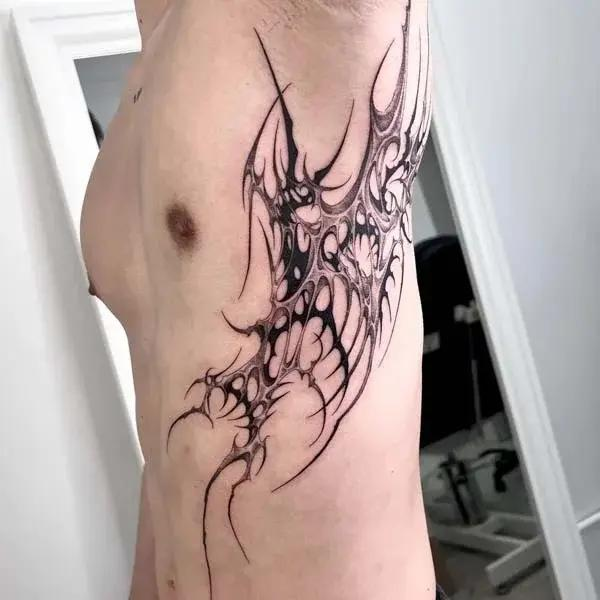
An abstract neotribal tattoo gives you the freedom to move beyond recognizable symbols and focus entirely on shape and composition. I love this approach because the design can be created specifically around your chosen body placement.
Curves can follow muscles, sharp points can create movement, and thick black sections can contrast with open skin. You can build the tattoo around a central form or create a continuous flowing pattern. The absence of a literal subject also makes the design feel more contemporary. This is a great option for anyone who wants their tattoo to function primarily as wearable abstract artwork.
22. Neotribal Face Tattoo

A neotribal face tattoo is an extremely visible choice, so the design should be approached with careful consideration. I would favor relatively simple shapes that follow the natural lines of the face rather than overly detailed patterns. Small pointed elements near the temple, cheek, or jaw can create a graphic appearance. Because facial skin and individual facial structures vary significantly, placement should be planned directly with an experienced professional.
Consider how the design will look with different expressions and angles. A clean, balanced composition can create a distinctive aesthetic without relying on excessive detail or complicated imagery.
23. Neotribal Blackwork Tattoo

Blackwork and neotribal aesthetics can work beautifully together because both styles can make strong use of solid black areas and negative space. I would create a composition using bold shapes, curved lines, pointed sections, and carefully controlled open areas. The contrast between ink and skin becomes a major part of the design. Blackwork also gives the tattoo a strong graphic quality that can remain visually striking even without color.
This concept can work across almost any body placement, including arms, legs, chest, back, and shoulders. A carefully planned silhouette can make a relatively simple design feel powerful and intentional.
24. Neotribal Ornamental Tattoo

An ornamental neotribal tattoo combines decorative symmetry with the bold visual language of heavy black shapes. I like using repeated curves, pointed details, arches, and flowing sections to create a design that feels almost like jewelry on the body.
The pattern can be centered on the chest, sternum, thigh, back, or shoulder. Negative space can separate the ornamental elements and keep the composition readable. You can make the design delicate with thinner sections or more dramatic with large areas of solid black. This style is especially appealing if you want something decorative while still maintaining a strong contemporary tattoo aesthetic.
25. Full Body Neotribal Tattoo
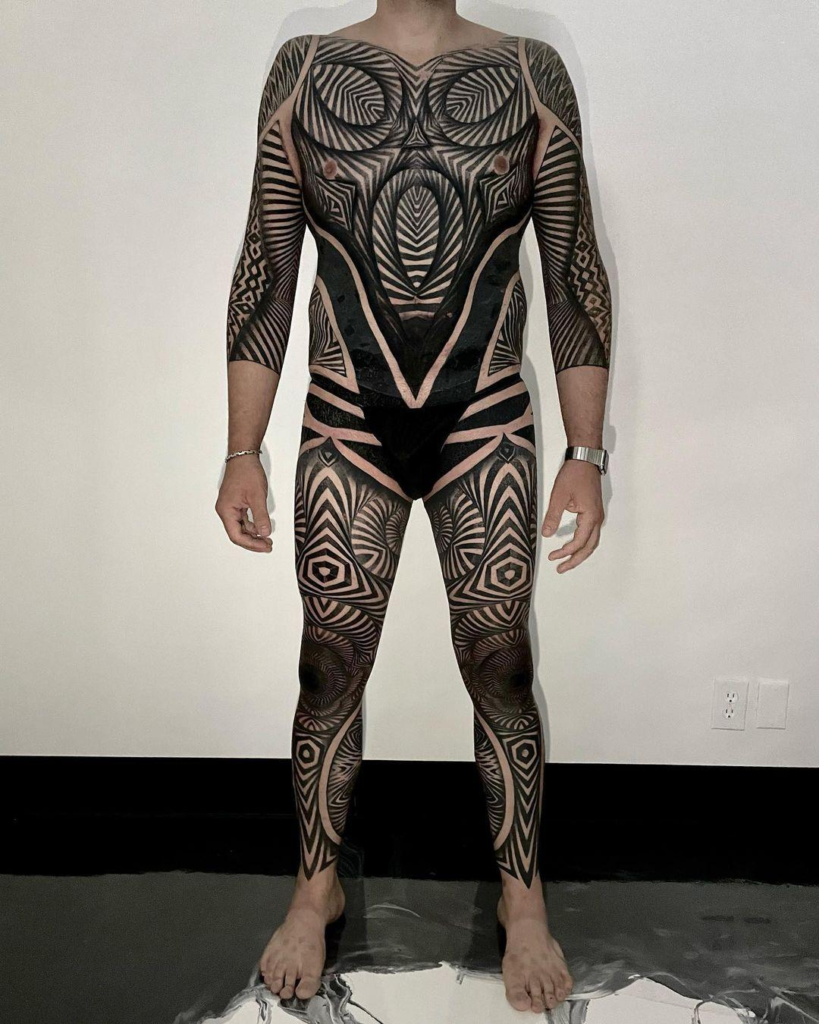
A full-body neotribal concept can connect several individual tattoos into one continuous visual language. I would plan the major sections together so the shapes, spacing, and movement feel intentional across different areas of the body. Large black patterns can be separated with negative space, while repeating curves can visually connect the chest, arms, back, and legs.
This type of project requires significant planning and should be developed gradually with an experienced tattoo artist. You can also build the design over time rather than completing everything at once. The result can become a highly personal collection of interconnected abstract artwork.
Neotribal tattoos offer countless ways to experiment with bold shapes, flowing curves, heavy blackwork, sharp points, and creative negative space. I love how the style can shift depending on the placement and the artist’s interpretation, giving every design its own personality. A small forearm pattern can look completely different than a large back piece, even when both use similar visual elements.
Before choosing your favorite idea, think about the size, placement, composition, and long-term appearance you want. A skilled tattoo artist can also adapt the concept to your body’s natural contours, helping create a design that feels balanced, distinctive, and personal.